
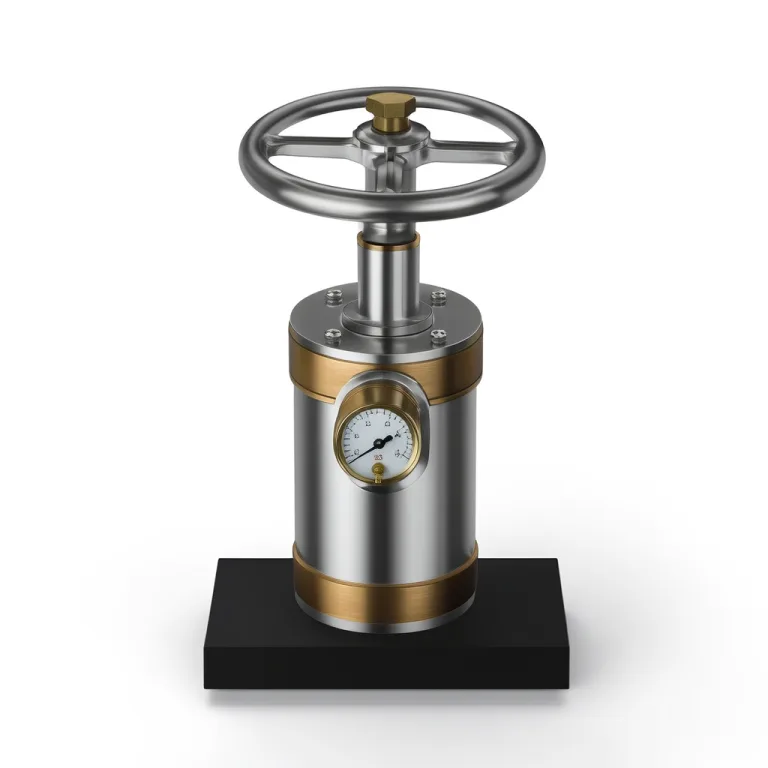
Boiler Feedwater Control Valve
Boiler Feedwater Control Valve for industrial applications.
About Boiler Feedwater Control Valve
Boiler Feedwater Control Valve for industrial applications.
| Domain | boiler |
|---|---|
| Product Family | Valves |
Who Works With Boiler Feedwater Control Valve?
7 engineering roles are connected to Boiler Feedwater Control Valve based on verified research evidence.
Engineer
Technician
Technician is a widely recognized professional role in HVAC engineering, explicitly referenced in ASHRAE guidance for cooling tower systems. While generic, it denotes a credentialed, hands-on technical role responsible for installation, commissioning, operation, inspection, maintenance, troubleshooting, and testing of HVAC equipment including cooling towers. It is not product-specific (e.g., no 'Cooling Tower Technician' prefix), so product_specific_title = false. The role is distinct from engineers or operators and falls under the Maintenance family with broad technical execution responsibilities.
Instrumentation Technician
Sensor Technician is a widely recognized occupational title in industrial automation, particularly within instrumentation and control systems. While 'Sensor Technician' explicitly references the product (sensors), it maps directly to the standardized role 'Instrumentation Technician'—a core profession in process and automation engineering that specializes in calibration, maintenance, diagnostics, and integration of field devices including proximity, temperature, and pressure sensors. Evidence from Glassdoor job postings confirms responsibilities aligned with sensor lifecycle support in automation contexts.
Process Engineer
Beverage Process Engineer is a recognized engineering role specializing in process design, validation, and compliance for beverage manufacturing systems. While 'Beverage' denotes industry context (not product-specific specialization), the role directly engages with ribbon blenders — particularly in specification, commissioning (including IQ/OQ), CIP/SIP integration, and 3-A sanitary validation — all cited in job listings. 'Process Engineer' is the canonical, general professional title; 'Beverage' reflects domain application, not an inseparable part of the core role definition.
Boiler Operator
Boiler Operator is a formally recognized occupational title in industrial and HVAC contexts, defined by federal occupational standards (e.g., U.S. OPM series 1342) and industry practice. It denotes a certified or licensed role specifically responsible for safe, compliant operation and routine maintenance of boilers — including heating boilers used in commercial/industrial HVAC systems. While 'boiler' is product-specific, 'Boiler Operator' is an established, standardized job title (not a one-off product-modified variant), with distinct training, licensing (e.g., state boiler operator licenses), and regulatory scope. It is not over-specialized like 'Chiller Operator' (which lacks formal recognition), but rather a canonical role in mechanical operations.
Control Systems Engineer
Motion Control Engineer is a widely recognized, distinct engineering role within industrial automation, specializing in the design, integration, and validation of motion systems—including servo motors, drives, and motion networks (e.g., EtherCAT, CANopen). While 'Motion Control Engineer' includes a domain qualifier ('Motion'), it denotes a well-established specialization—not merely a product-specific title—supported by industry practice (e.g., job postings at Rockwell Automation, Bosch Rexroth, Yaskawa) and professional societies (ISA, IEEE). It generalizes to 'Control Systems Engineer' as the canonical broad role, with 'Motion Control' as a valid, accepted specialization. The role directly engages with servo motors and actuators across the lifecycle: specifying motor/drive combinations, designing motion profiles, commissioning integrated systems, troubleshooting dynamic performance issues, and validating control accuracy.
Instrumentation and Control Technician
Technician is a widely recognized professional role in industrial automation; within DCS contexts, it specifically refers to Instrumentation and Control Technicians (also called DCS Technicians or I&C Technicians), who perform hands-on installation, calibration, commissioning, maintenance, and troubleshooting of distributed control systems. The evidence from Indeed job listings confirms active demand for 'Distributed Control System Technicians' across critical infrastructure sectors.